What Is ASMI and the College of Blues Rock
The Art of Music Sounds Institute (ASMI) is a registered nonprofit corporation in North Carolina and a subsidiary of Classic Rock Turntables.com.
The Core Vision: ASMI’s mission is to help Rock Musicians achieve Sonic Self‑Actualization, the point where intention and sound align, through Intentional Audition (the art of listening) and Intentional Practice (the art of disciplined output). Together, these twin disciplines recalibrate how artists hear themselves and one another.
1. The Living E‑Books: “The Ancestral Blueprint”
This isn’t a static encyclopedia; it’s a living genealogy of vibration. ASMI traces the human soundline, from bone flutes and tribal percussion to modern amplification and synthesis, revealing how every tone carries ancestral DNA.
What makes it living is its adaptability: as new technologies emerge (AI‑assisted composition, immersive audio), the sounds evolve. Bands gain context, not just history, discovering that a distorted guitar riff in 2026 is the spiritual offspring of a war drum or a cathedral organ’s resonance.
2. The “Art of Listening” Program: “Internal Calibration”
Most musicians obsess over output, speed, volume, and virtuosity. ASMI reverses the lens, teaching the Art of Input. By redefining how a band listens, to themselves, to silence, to space, the program refines what they say sonically.
Each group has a unique “Basket of Sounds,” shaped by its instruments, players, improvisation and chemistry. Instead of wrestling their setup, participants learn to hear what their ensemble is asking to become. They train to recognize “the holes” in their soundscape... the negative space where meaning often hides.
What “Art of Listening” Means
Instead of just hearing parts, Rock Bands learn to:
Identify the role of every instrument in a mix... melodic, rhythmic, harmonic, and textural.
Notice how space, silence, and dynamics create tension and release.
Trace how Classic Rock records (from early jazz and blues to grunge, indie, hip‑hop, and beyond) solve the same problems they face in their own songs.
From History To Their Own Sound
Each week, the Bands:
Breaks down landmark tracks from different decades to hear what changed in tone, groove, arrangement, and attitude.
Maps those discoveries onto their own material, experimenting with feel, form, and sound choices.
Refines a small set of “signature moves” that fit their natural chemistry instead of copying trends that don’t belong to them.
The Practical Outcome
By the end of the Program, Bands:
Hear more clearly where their arrangements are cluttered, unclear, or generic.
Make smarter choices about what to play, when not to play, and how to support the song instead of their egos.
Walk away with a tighter, more intentional live set list and a clearer sonic identity they can take into the studio, onto the stage, and into every future rehearsal.
ASMI Band Training Programs
Each year, ASMI selects three promising bands per 6 six general categories for a tuition-free, four-plus-week intensive Program. The six programs represent the evolutionary paths of modern amplified sound—each one is an ecosystem where craft, culture, and personality collide to forge distinctive sonic identities.
Program 2: Blues Rock
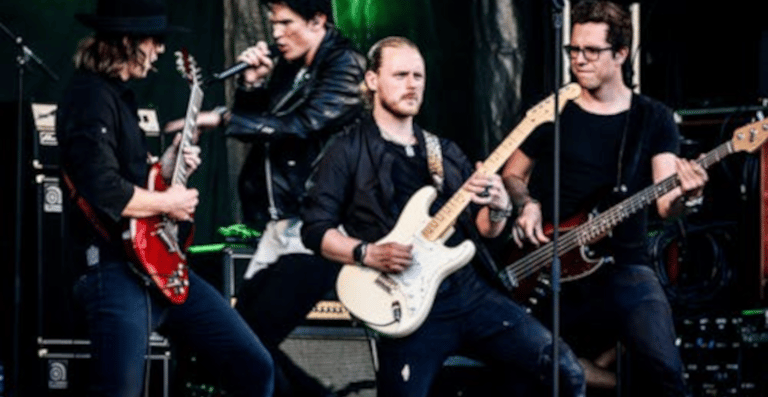
The Focus: Blues Rock fuses raw soul with electric voltage—Chicago blues heartbreak amplified into rock rebellion. It's the twelve-bar cry of Muddy Waters and Howlin’ Wolf reborn through overdriven amps, leaner, louder, and built for the stage.
Where soul met voltage in the mid-1960s, British invaders (Clapton, Beck, Page) and American torchbearers (Johnny Winter, Stevie Ray Vaughan) revived the masters. The foundation endures: twelve-bar structure, call-response licks, emotional bends. But amplification adds urgency—rebellion in every riff, feeling made physical.
Key Crossover: From Cream’s Crossroads fire to ZZ Top’s boogie grind, bands trace how blues phrasing adapts to psych jams, Southern rock, even metal hooks. They emerge wielding tone that bleeds authenticity: solos that sting, rhythms that groove deep, a sound that's weathered, wise, and wired for impact.
Program 3. Jazz Rock ( Jazz Fusion )
The Focus: Jazz Rock—better known as Jazz Fusion—is intellect meeting electricity. It fuses jazz's improvisational depth and harmonic complexity with rock's amplified drive, launching bands into uncharted orbit.
The "Listening" Lesson: Bands train to hear Tension (jazz's suspended chords and odd meters building suspense) against Release (rock grooves that ground the chaos). It's spontaneous thought made audible—each player a composer, astronaut, virtuoso in real time.
Where Blues Rock stayed earthy, Fusion rocketed skyward in the late '60s and '70s. Icons like Miles Davis (Bitches Brew), Weather Report, and Return to Forever wed Coltrane modals with electric pianos, fusion bass, and shredding guitars. Extended solos twist through 7/8 signatures; studio wizardry layers funk pulses under cosmic flights.
Key Crossover: From Mahavishnu's fiery precision to Herbie Hancock's synth-funk headspace, bands map how fusion invades prog, funk, even metal. They emerge with fearless interplay: polyrhythms that lock, harmonies that surprise, a sound that's cerebral yet visceral—technical fireworks with soul-deep groove.
Program 4. Folk / Country / Spiritual Rock... The "Narrative-Acoustic" Hybrid
The Focus: This path weaves storytelling, soul, and spirit into rock's rhythmic pulse—where folk's lyrical honesty, country's open-road twang, and spirituals' communal uplift amplify into arena anthems.
If Blues Rock channels grit and Jazz Rock orbits complexity, this style grounds everything in raw connection. From Dylan’s folk-to-electric shift, Eagles’ country-rock expanse, to Springsteen’s working-class spirituals or U2’s anthemic faith, it transforms intimate roots into electric communion.
Key Crossover: Bands trace how these threads braid into Americana, alt-country, and heartland rock—ballads that build to gospel choruses, fingerpicked tales over driving beats. They emerge with songs that resonate deeper: honest narratives, roots-aware hooks, a sound that carries personal journey into universal fire.
Program 5. Progressive Rock
The Focus: Prog Rock is rock's art-house—ambitious, intricate, cinematic. Born in the late '60s and '70s, it turns albums into vast canvases of composition, narrative, and sonic architecture.
Where Folk/Country/Spiritual Rock tells intimate stories, Prog builds epics. Yes orchestrates Mellotron majesty, Genesis weaves theatrical tales, King Crimson fractures time with cosmic edge, Pink Floyd paints psychedelic vastness. Extended suites in odd signatures (7/8, 5/4) layer classical motifs over rock drive.
Key Crossover: Bands trace prog's DNA into metal, post-rock, and mathcore—multi-part suites that evolve live. They emerge crafting their own odysseys: time signatures that twist, dynamics that transport, a sound that's intellectually thrilling yet emotionally towering.
Program 6. Funk Rock
The "Listening" Lesson: Bands dissect Pocket (micro-timing that locks the groove) from Scratch (guitar's percussive stabs and bass's elastic slaps). It's the street heartbeat amplified—muscular, joyful, defiant, alive.
Where Prog Rock builds cerebral journeys, Funk Rock demands bodies move. From Hendrix's Voodoo Child funk-metal edge to Living Colour's riff-driven punch, Red Hot Chili Peppers' slap-pop chaos, or Primus' warped low-end, every element serves the feel: bass leads, drums converse, guitars chop like hi-hats.
Key Crossover: Bands map how funk invades alt-rock, nu-metal, even hip-hop hybrids—riffs that bounce, breaks that breakdance. They emerge with music that commands crowds: irresistible grooves, razor-tight interplay, a sound that's visceral, visceral, and victory-dance ready.
♪♪♪
Weeks 1–2: Studying the Masters
In week 1, Bands follow the evolution of Sounds by each period of from the base Sounds of Music developed in 1880...
Study the 8 elements of Music and Music Theory...
How those elements were applied to the Sounds of the 20s, 30s, 40s, 0s, 60s, 70s, and 80sThe 20s...
♪♪♪♪♪♪♪♪♪♪♪♪
♪♪♪♪♪♪♪♪♪♪♪♪
In week 2, we will dissect the recordings of the artists who defined these subgenres...
Track by track, bands learn to hear:
Groove, feel, and pocket.
Tone and sound choices (guitars, amps, drums, keys, vocals).
Arrangement: who plays what and when.
Song structure and dynamics: how tension and release are built across the track.
The message to bands is: these artists weren’t just “famous”—they found and mastered specific sounds that defined their careers.
Week 3 is devoted to
Week 4+: Mentoring and “Band Off”
In Week 4 and beyond, each band is paired with a professional mentor chosen specifically for that band’s style and goals. The mentor works with the band in daily practice sessions to:
Refine their sound and arrangements.
Tighten their live performance and communication.
Help them apply what they learned from the Masters to their own songs.
At the end of the program, ASMI hosts a “Band Off”—a friendly competition modeled loosely on “American Idol”‑style showcases. Each band performs a short set, receives feedback, and shows how far they’ve come in just a few weeks. The winning band earns a demo session at a local studio, giving them a real calling card and a practical next step.
The Big Idea: ASMI exists to answer one question for serious “Wannabe” Bands:
"If you’re ready to stop just playing songs and start sounding like you belong on the same stage as your heroes, ASMI gives your band the elite mentorship and “Art of Listening” training that turns raw potential into a real, recognizable sound—bridging the gap between where you are and the best version of yourselves in one tuition‑free, high‑octane intensive."
By teaching the Art of Listening and pairing bands with experienced mentors, ASMI turns raw enthusiasm into focused growth—and gives local bands a free, structured shot at leveling up their "Sounds" for the future!